Wednesday, April 8, 2009

How to Remove Internet Explorer 8 Easily

April 08, 2009 0
How to Remove Internet Explorer 8 Easily

Microsoft’s IE8 is open for download. It offer loads of new features including faster browsing, web slices and accelerators. We already discussed about IE8 ToolKit for developers. If IE 8 failed to attract you and If you want to uninstall Internet Explorer 8 from your Computer easily, here is a way that will remove IE 8 completely.

Uninstall Internet Explorere 8

To do this, You have to download a uninstaller from Microsoft’s website. It is called ‘fix it’ un-installer and it will remove Internet Explorer8 in few simple mouse clicks. Click Here and download the uninstaller and then click ‘Microsoft Fix it’ icon.

Then click on run button on the pop up window or open the uninstaller, follow the on-screen instructions and remove Internet Explorer8 easily. You can also check out different ways of uninstalling or removing IE8 like editing registry and other alternate steps etc from the same page above. This is the simplest and fastest method to remove Internet Explorer 8.
How to Remove the arrows from Shortcut icons

April 08, 2009 1
How to Remove the arrows from Shortcut icons

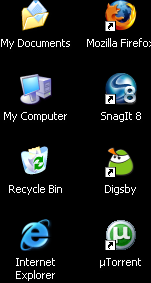
All the Shortcuts have an arrow, and it’s irritating to a few people (like me). If you want to remove the arrows, open the Registry Editor, navigate to HKEY_LOCAL_MACHINE\SOFTWARE\Microsoft\Windows\CurrentVersion\Explorer\Shell Icons. If this key does not exist, create it.

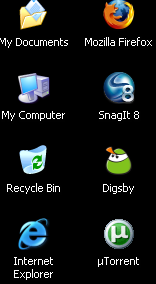
Now, create a new String value inside this key and name it “29”. Set the value of this String value to “C:\Windows\System32\shell32.dll,52”, which is basically an empty icon. Now close the Registry Editor and restart your computer to see the arrows disappear.

If you’re doing something important,and don’t want to restart just yet, you can force Windows to redraw all the
icons by doing the following:

Right-click on the Desktop, select Properties. Now click on the Appearance tab and click Advanced.

From the drop-down list, choose icon, and change the value (the default is 32). Click OK and then Apply. Now go back and restore the value to 32 and click OK, Apply, and then OK. This will bring you back to your desktop, and you will find all those pesky arrows gone.

with arrow without arrow

You can also replace the arrows with something else. Just change the path provided in the Registry hack mentioned
earlier (“C:\Windows\System32\shell32.dll,50”) to the path of the icon you want to use.


How to prevent access to Drives from My Computer

April 08, 2009 0
How to prevent access to Drives from My Computer

This is very useful to those people who don’t want others to access their information or data they store on thheir Hard Disks. We can redtrict the acess by using Group Policy Editor. This is used in order to make modifications in the XP as per our needs. I will be posting more on this later. First let us see how to prevent access to drives from My Computer.

  1. First Goto Start then to Run.
  2. In run type gpedit.msc and press Enter.
  3. Then you can see a window. On the left side click on User Configuration.
  4. Expand Administrative Tempelates and in that click on Windows Explorer
  5. On the right side you can find the option "Prevent access to drives from My Computer"
  6. Double click on it. A new window will get opened.
  7. In that window select Enable. ( here you have the option of selecting the specific drive to restrict or you can restrict all drives by choosing from the drop down menu below the options )
  8. Click Apply. Then OK

Note:Â The affect will take place immediately


How To Remove System Volume Information of System Restore

April 08, 2009 0
How To Remove System Volume Information of System Restore

If you use System Restore, you must have noticed the System Volume Information folders in the root of each of your drives. This folder stores the files used by System Restore. Their sizes can sometime balloon to gigabytes, because System Restore doesn’t delete your older restore points when creating a new one. Moreover, every time you try to access the folder, you get the Access Denied error. Oh, and you can’t delete the folder, either. So what do you do when you want to view its contents?

Here is the error you’ll see when trying to access the System Volume Information

system-volume-information-access-is-denied

In an Explorer Window, go to Tools> Folder Options > View. Here, choose Show Hidden Files and Folders. Uncheck Hide Protected Operating System Files and Use Simple File Sharing. You should now be able to access the System Volume Information folder; if not, you’ll have to add yourself to the list of users allowed to access the folder.

Right-click on System Volume Information and go to Properties > Security. Click Add under Groups or User names and enter your username in the dialog that appears. Click OK, and in the bottom half of the Security tab, grant yourself all the permissions.


Speed up booting time

April 08, 2009 0
Speed up booting time

When you switch on your computer it takes some time to load. I know everyone knows this piece of information but my intention was not to explain about the booting process, but to give you a trick to speed up the booting time or windows start up time. I tried this registry hack as I was very much vexed up with the time taken to start my computer and it worked too.

Here is the way to turn on your PC in much less time:

  • First click on the start button and press R it will take you to Run.
  • Then type Regedit and Press Enter.
  • This will open Registry Editor.
  • Now look for the key.

HKEY_LOCAL_MACHINE\SYSTEM\CurrentControlSet\Control\ContentIndex

  • In the resultant result find the Key Called “Startup Delay”
  • Double Click On It.
  • Click Decimal where it is base.
  • Now its Default Value Is 4800000.
  • Change The Value To 40000.
  • Now close the Registry Editor and Restart Your Computer.
  • You’ll See The Result after restarting the computer.

Note: Always back up your registry before doing any tweaking it.


How To Block USB Devices

April 08, 2009 0
How To Block USB Devices

The most important thing for any one who owns a Computer or laptop is their DATA. This data or iinformation or whatever it may be will sometimes contains private items and also some confidential items. But these days the data can be easily copied by the pen drives or USB drives. This is mianly happening just because we will be a little careless about the security of this data. Also the PC will be vulnerable to viruses as USB’s contain them the most.

So in order to prevent this data theft we have something which doesn’t require any software installations. We will block or restrict the USB drives in our Computer so that it doesn’t work and this involves a small registry hack. I was going through some registry hacking books and came to know about this trick. In order to do this

  1. First Go to Start -> Run then type Regedit and ENTER.
  2. You will see a window which is called Registry Editor.
  3. In that window Go to Hkey_Local_Machine\System\CurrentControlset\Services\USBStor
  4. In the right pane, look for value Start and have value as 0000000(3)
  5. Double click on that and change that value to 4.

The effect can be seen after a reboot of your system. This is very useful trick to make your data safe and secure. If you want to unlock the drives you can always do it by changing the value again to 3.
Have a safe PC..!!


How To Change START Name

April 08, 2009 0
How To Change START Name

Ever wondered how would it be if the start menu of Windows Xp has your name instead of START. There is a small registery hack to make this tweak.

To change name of START menu :

  1. Copy EXPLORER.EXE in your Windows directory ( The direectory is found in the drive where you have installed youe XP ) to another directory
    Start a hex editor (use resource hacker)
  2. Edit EXPLORER.EXE
    go to “string table” & to “37″ click on 1033
    you will see “start” written on the next table
    Now just replace the Start letters with any of your choice (up to 5 characters only IMPORTANT).
  3. Compile the script & save it.
  4. Rename this file as any name say explorer1.exe
    copy it in your windows directory.

Open registry editor navigate to HKEY_LOCAL_MACHINE\SOFTWARE\Microsoft\Windows NT\CurrentVersion\Winlogon double click “shell” &
enter name of your new explorer(explorer1 )in this case.
restart to see changes.

P.S: Remember to make up a back up copy of your registery before making this hack as there is a chance of crashing of your system.

If the crash occurs you can recover your system. To do this

  • Open the TASK-MANAGER and in new task enter “regedit”
  • In the resultant window undo the changes which we have made before ( i.e., renaming explorer1 to explorer again)

So Go ahead and surprise all your friends with your name as the start menu button. Happy hacking..!!


Spice Up Your Context Menus

April 08, 2009 0
Spice Up Your Context Menus

Mouse is some thing which makes our life so easy. Everything can be done at the click of a button. The Windows context menu is a trusted tool, and I rely on it heavily. We can use this context menus in a way we like i.e., personalizing them or creating our own context menus.

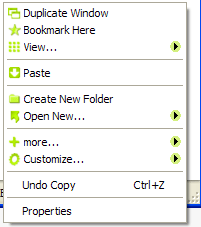
Moo0’s Right Clicker makes several welcome additions to the default options. I particularly like the folder bookmarking feature, which makes it a snap to navigate between folders in any explorer view. Couple it with the copy to and move to features, and managing files and folders in Explorer is much simpler.

moos right clicker

It also adds a "go up" option to the menu - much quicker than mousing up to the Explorer toolbar - and the ability to copy a file’s name or full path to the clipboard. Right Clicker’s duplicate feature will spawn a new window with the current location (even from a file dialog). I find this particularly useful when I’m uploading or editing something and notice some file system untidiness that needs to be addressed immediately.

Right Clicker is available in free and paid versions, and my only real gripe is that the advanced options are all visible but grayed out. You know, just to remind us what we’re missing out on. Still, it provides a nice set of functions that context menu aficionados are sure to welcome. Try it. Its worth it.


How To Add ‘Insert’ Option To CD Drive Context Menu

April 08, 2009 0
How To Add ‘Insert’ Option To CD Drive Context Menu

Context Menu’s are Menus which are specifically allotted for a particular application. In other words they are the menus which will be opened when you right click a particular application. You ca tweak the context menus by simple registry hacks. In this tutorial we are adding an Insert option in the CD Drive’s Context Menu which can be used to open the CD drive to Insert the CD. Here is the step-by-step procedure:

1. Download the file cdeject.zip from http://tinyurl.com/38xklh, extract it and copy the DLL file to the %windir%\System32 folder.

2. Copy the following code into Notepad:

Windows Registry Editor Version 5.00

[HKEY_CLASSES_ROOT\CLSID\{02A07E8
0-EFA2-11D4-8306-A7EBD4C50C7C}]
@=”CDEject Context Menu Shell
Extension”

[HKEY_CLASSES_ROOT\CLSID\{02A07E8
0-EFA2-11D4-8306-
A7EBD4C50C7C}\InprocServer32]
@=”C:\\WINDOWS\\system32\\cdeject
.dll”
“ThreadingModel”=”Apartment”

[HKEY_CLASSES_ROOT\Drive\shellex\
ContextMenuHandlers\{02a07e80-
efa2-11d4-8306-a7ebd4c50c7c}]
@=”{02a07e80-efa2-11d4-8306-
a7ebd4c50c7c}”

3. Save the file with any name, but the extension must be .reg.

4. Run the file; it’ll ask for permission. Grant it.

5. You’ll now get the Insert option in the CD drive context menu!


How to Add Copy to / Move to To The Right-Click Context Menu

April 08, 2009 0
Here is an extremely useful registry hack for windows XP and Vista, which adds "Copy to folder" and "Move to folder" to the right-click context menu of every file and folder. When you select, say, "Copy to folder," you’ll get an Explorer-style menu where you can navigate and choose the destination folder where the contents should be copied or moved.

First of all, Navigate to:

HKEY_CLASSES_ROOT\AllFilesystemObjects\shellex\ContextMenuHandlers

Create a new key here called "Copy To". Change the "(default)" value to
{C2FBB630-2971-11D1-A18C-00C04FD75D13}

Then, in the same key (HKEY_CLASSES_ROOT\AllFilesystemObjects\shellex\ContextMenuHandlers),

Create a new key called "Move To".

Change its "(default)" value to {C2FBB630-2971-11D1-A18C-00C04FD75D13} and the change will be effective immediately and you can see the options in the context menu of any folder or file.

After you do the above registry edits, you can see a window like above which will pop up after you click copy to folder in your right click context menu. So, now you can easily copy anything to a specific folder directly without opening every file and folder.


How to Clean Open With Option of Right Click Context Menu

April 08, 2009 0
How to Clean Open With Option of Right Click Context Menu

When you right-click on a file, one of the options you see is “Open With”. These usually contain what Windows thinks are valid programs to open particular file types. Now, sometimes, when you have bad installers or uninstallers, some programs leave their mark on this context menu. Basically, if you want to clean out this long list of junk that accumulates here, you have to edit the Registry.

Open the Registry Editor and navigate to HKEY_CURRENT_USER\Software\Microsoft\Windows\CurrentVersion\Explorer\FileExts

Now, for example, if you have to remove programs from the Open With menu for AVI files, find the extension on the left that corresponds to AVI files and click on the “+” sign to expand it and find the “OpenWithList” key. In the right pane you should see a list of programs, such as “wmplayer.exe”, “notepad.exe”, “mspaint.exe”, etc. Select the ones you don’t want and delete them.

Next, navigate to HKEY_CLASSES_ROOT and find the same extension. Again, navigate to “OpenWithList” and delete the unwanted programs. This key is where Windows reads from when using the All Users profile. Now you will only see the programs that you want in the Open With list… well, most of the time; the problem is that Windows also reads the Open With list from another registry key: HKEY_CLASSES_ROOT\SystemFileAssociations\

Here’s where it reads the default Open With list from, but I strongly advise you against changing it because it might affect multiple file types.


How to Add Various File types to the Context Menu in Explorer

April 08, 2009 0
How to Add Various File types to the Context Menu in Explorer

In Explorer, when using the File > New option, or when right-clicking and selecting New, you get a list of files that you can create, including text documents, folders, images, sounds, Excel spreadsheets, etc. If you want to be able to make new items, such as HTML files or RTF documents, you will have to edit the Registry.

Open the Registry Editor and navigate to HKEY_CLASSES_ROOT. Here, find the extension of the file type you want to be able to create, such as .htm or .rtf, and then find the key called ShellNew. If the file type does not have a ShellNew key, create one.

own context menu item

Now, in the right-pane of the Registry Editor, create a new String value called NullFile. Now you need to close the Registry Editor and restart Windows.

The next time you right-click, you will be able to create a new file (.htm in our example) by selecting File > New. A zero byte file will be created, which you can then edit.


How to disable the Windows System tray

April 08, 2009 0
How to disable the Windows System tray

One of the most frequently accessed places on your desktop will be your Windows System tray. What is good about this little tray is that it gives access to some of your running programs through a tiny icon. But when the installed programs are more it will occupy most of the space in the taskbar. Although there is an option of hiding the inactive icons so that only some are visible , for a person like me who dont use the windows system tray that much often it will be cool to disable it completely.

tray.jpg


For this all you got to do is a manual Registry hack :

  • Open the run programs dialog box (either by hitting Win+R or finding the Run icon in the Windows Start Menu)
  • Type “regedit” to open the Windows Registry Editor
  • Find this section: HKEY_CURRENT_USER\Software\Microsoft\Windows\CurrentVersion\Policies\Explorer
  • Create a new 32 bit DWORD Value by right-clicking and selecting new DWORD or clicking Edit, then New, then DWORD
  • Name your DWORD Value NoTrayItemsDisplay
  • Set the value to 1


And it is done. After Next time you log out of Windows or reboot your system tray should be gone. All of your programs will continue to run, but you won’t see any icons at the bottom right of your screen. You can even remove the clock by right clicking on the tray and disabling the clock.

This hack will not disable the applications , it just disables the tray. The useless applications should be disabled individually

To remove the hack, just delete the key, or change the value to 0. Note that the same registry key may exist in more than one location, so if you are trying to reverse this hack, you should search the registry for NoTrayItemsDisplay.

NOTE : you can use this hack in the reverse way that is if your system tray is disabled and you don’t know why, you should check this registry key.


How to Add A Command-Prompt to Right-Click Context menu of Every Folder

April 08, 2009 0
How to Add A Command-Prompt to Right-Click Context menu of Every Folder

If you use the command line window a lot, this hack will let you open a command prompt at the selected directory. This trick will add a right click context menu option for opening Command Prompt in every folder. To perform this registry hack..

Navigate to:

HKEY_CLASSES_ROOT\Directory\shell

Create a new sub-key called Command under the main key (that is, the new key will be HKEY_CLASSES_ROOT\Directory\shell\Command).

command prompt in context menu of folders

Change the value of “(Default)” within that key to the text you’d like on the right-click menu.

For example, “Open A Prompt Here!”

Create another, new sub-key under the key created above, again called “command” (so this key will be
HCR\Directory\shell\Command\command).

Change the value of “(Default)” here to “cmd.exe /k cd %1”, without the quotes. Now right-click on a folder, and voila! you can see an option to open command prompt.


How to change Start up Sound in Windows XP

April 08, 2009 0
How to change Start up Sound in Windows XP

You can change the start up tune of Windows XP to the tune you like. This involves a simple procedure and by doing that you can make your own start up and turn off tunes. All the sounds in Windows XP are in WAV format. So if you want to change any of the system sound you should replace it by a sound of .wav format.

The following steps will help you change the system sounds:

  • First pick a sound or music you like. If it is not in WAV format convert it by some audio converters like mp3 to wav converter or Total Audio Converter etc. Make sure that the length of the sound should match up the time the sound plays. here I m doing the start up tone.
  • After you made the sound into wav format goto > control panel > Sounds and Devices

start up sound

  • In the resultant window select SOUNDS and program events: select the desired one you want to change like
  • Then browse for the location of you wav file and then click Apply and OK.
  • That’s it you are done with your own start up tune. Like this you can change every sound of Windows XP like maximise and minimise, turn off etc. But make sure that you save your sound scheme before doing this as it will provide a roll back option for you. Enjoy tweaking by putting in your favourite song as a start up tune.

    Quickly Change your IP Address

    April 08, 2009 0
    Quickly Change your IP Address

    Changing IP address often involves some third party software or some serious procedures. IP address is the only thing which identifies your computer in the internet. This can be changed at will and can be done by following some simple steps. This will be helpful for Anonymous surfing or when you are downloading a file from Rapidshare or other sites which will prevent multiple downloads from same IP address. The procedure is as follows..

    1. Click on "Start" in the bottom left hand corner of screen

    2. Click on "Run"

    3. Type in "command" and hit ok. You should now be at an MSDOS prompt screen.

    4. Type "ipconfig /release" just like that, and hit "enter"

    5. Type "exit" and leave the prompt

    6. Right-click on "Network Places" or "My Network Places" on your desktop.

    7. Click on "properties"

    You should now be on a screen with something titled "Local Area Connection", or something close to that, and, if you have a network hooked up, all of your other networks.

    8. Right click on "Local Area Connection" and click "properties"

    9. Double-click on the "Internet Protocol (TCP/IP)" from the list under the "General" tab

    10. Click on "Use the following IP address" under the "General" tab

    11. Create an IP address (It doesn’t matter what it is. I just type 1 and 2 until i fill the area up).

    12. Press "Tab" and it should automatically fill in the "Subnet Mask" section with default numbers.

    13. Hit the "Ok" button here

    14. Hit the "Ok" button again
    You should now be back to the "Local Area Connection" screen.

    15. Right-click back on "Local Area Connection" and go to properties again.

    16. Go back to the "TCP/IP" settings

    17. This time, select "Obtain an IP address automatically"

    18. Hit "Ok"

    19. Hit "Ok" again

    20. You now have a new IP address

    With good practice you can perform the whole operation in some seconds which will be the easiest way to change IP address.

    Note :

    This only changes your dynamic IP address, not your ISP/IP address. If you plan on hacking a website with this trick be extremely careful, because if they try a little, they can trace it back

    10 Simple Ways To Speed Up Your Windows XP

    April 08, 2009 0
    10 Simple Ways To Speed Up Your Windows XP

    Here are some 10 quick tips to speed up your computer. I have already posted about ways of speeding up your computer. These will help your XP run faster.


    1. Defrag Disk to Speed Up Access to Data

    One of the factors that slow the performance of the computer is disk fragmentation. When files are fragmented, the computer must search the hard disk when the file is opened to piece it back together. To speed up the response time, you should monthly run Disk Defragmenter, a Windows utility that defrags and consolidates fragmented files for quicker computer response.

    * Follow Start > All Programs > Accessories > System Tools > Disk Defragmenter
    * Click the drives you want to defrag and click Analyze
    * Click Defragment

    2. Detect and Repair Disk Errors

    Over time, your hard disk develops bad sectors. Bad sectors slow down hard disk performance and sometimes make data writing difficult or even impossible. To detect and repair disk errors, Windows has a built-in tool called the Error Checking utility. It’ll search the hard disk for bad sectors and system errors and repair them for faster performance.

    * Follow Start > My Computer
    * In My Computer right-click the hard disk you want to scan and click Properties
    * Click the Tools tab
    * Click Check Now
    * Select the Scan for and attempt recovery of bad sectors check box
    * Click Start

    3. Disable Indexing Services

    Indexing Services is a little application that uses a lot of CPU. By indexing and updating lists of all the files on the computer, it helps you to do a search for something faster as it scans the index list. But if you know where your files are, you can disable this system service. It won’t do any harm to you machine, whether you search often or not very often.

    * Go to Start
    * Click Settings
    * Click Control Panel
    * Double-click Add/Remove Programs
    * Click the Add/Remove Window Components
    * Uncheck the Indexing services
    * Click Next

    4. Optimize Display Settings

    Windows XP is a looker. But it costs you system resources that are used to display all the visual items and effects. Windows looks fine if you disable most of the settings and leave the following:

    * Show shadows under menus
    * Show shadows under mouse pointer
    * Show translucent selection rectangle
    * Use drop shadows for icons labels on the desktop
    * Use visual styles on windows and buttons

    5. Speedup Folder Browsing

    You may have noticed that everytime you open My Computer to browse folders that there is a little delay. This is because Windows XP automatically searches for network files and printers everytime you open Windows Explorer. To fix this and to increase browsing speed, you can disable the “Automatically search for network folders and printers” option.

    6. Disable Performance Counters

    Windows XP has a performance monitor utility which monitors several areas of your PC’s performance. These utilities take up system resources so disabling is a good idea.

    * Download and install the Extensible Performance Counter List (http://www.microsoft.com/windows2000/techinfo/reskit/tools/existing/exctrlst-o.asp)
    * Then select each counter in turn in the ‘Extensible performance counters’ window and clear the ‘performance counters enabled’ checkbox at the bottom button below

    7. Optimize Your Pagefile

    You can optimize your pagefile. Setting a fixed size to your pagefile saves the operating system from the need to resize the pagefile.

    * Right click on My Computer and select Properties
    * Select the Advanced tab
    * Under Performance choose the Settings button
    * Select the Advanced tab again and under Virtual Memory select Change
    * Highlight the drive containing your page file and make the initial Size of the file the same as the Maximum Size of the file.

    Windows XP sizes the page file to about 1.5X the amount of actual physical memory by default. While this is good for systems with smaller amounts of memory (under 512MB) it is unlikely that a typical XP desktop system will ever need 1.5 X 512MB or more of virtual memory. If you have less than 512MB of memory, leave the page file at its default size. If you have 512MB or more, change the ratio to 1:1 page file size to physical memory size.

    8. Remove Fonts for Speed

    Fonts, especially TrueType fonts, use quite a bit of system resources. For optimal performance, trim your fonts down to just those that you need to use on a daily basis and fonts that applications may require.

    * Open Control Panel
    * Open Fonts folder
    * Move fonts you don’t need to a temporary directory (e.g. C:\FONTBKUP?) just in case you need or want to bring a few of them back. The more fonts you uninstall, the more system resources you will gain.

    9. Use a Flash Memory to Boost Performance

    To improve performance, you need to install additional RAM memory. It’ll let you boot your OS much quicker and run many applications and access data quicker. There is no easiest and more technically elegant way to do it than use eBoostr (http://www.eboostr.com/).

    eBoostr is a little program that lets you improve a performance of any computer, powered by Windows XP in much the same way as Vista’s ReadyBoost. With eBoostr, if you have a flash drive, such as a USB flash thumb drive or an SD card, you can use it to make your computer run better. Simply plug in a flash drive through a USB socket and Windows XP will use eBoostr to utilize the flash memory to improve performance.

    The product shows the best results for frequently used applications and data, which becomes a great feature for people who are using office programs, graphics applications or developer tools. It’ll surely attract a special attention of laptop owners as laptop upgrade is usually more complicated and laptop hard drives are by definition slower than those of desktops.

    10. Perform a Boot Defragment

    There’s a simple way to speed up XP startup: make your system do a boot defragment, which will put all the boot files next to one another on your hard disk. When boot files are in close proximity to one another, your system will start faster.

    On most systems, boot defragment should be enabled by default, but it might not be on yours, or it might have been changed inadvertently. To make sure that boot defragment is enabled:

    * Run the Registry Editor
    * Go to HKEY_LOCAL_MACHINE\SOFTWARE\Microsoft\Dfrg\BootOptimizeFunction
    * Set the Enable string value to Y if it is not already set to Y.
    * Exit the Registry
    * Reboot


    Speed Up Your Windows XP With Simple Ways

    April 08, 2009 0
    Speed Up Your Windows XP With Simple Ways

    Make Your Windows Xp Run Faster Than Never Before

    These Are Some Tricks That Make Use Of Programs Listed In This Guide And Nothing Will Happen Even If You Go

    DISABLE INDEXING SERVICES

    Indexing Services is a small little program that uses large amounts of RAM and can often make a computer endlessly loud and noisy. This system process indexes and updates lists of all the files that are on your computer. It does this so that when you do a search for something on your computer, it will search faster by scanning the index lists. If you don’t search your computer often, or even if you do search often, this system service is completely unnecessary. To disable do the following:

    1. Go to Start

    2. Click Settings

    3. Click Control Panel

    4. Double-click Add/Remove Programs

    5. Click the Add/Remove Window Components

    6. Uncheck the Indexing services

    7. Click Next

    OPTIMISE DISPLAY SETTINGS

    Windows XP can look sexy but displaying all the visual items can waste system resources. To optimise:

    1.Go to Start

    2. Click Settings

    3. Click Control Panel

    4. Click System

    5. Click Advanced tab

    6. In the Performance tab click Settings

    7. Leave only the following ticked:

    - Show shadows under menus

    - Show shadows under mouse pointer

    - Show translucent selection rectangle

    - Use drop shadows for icons labels on the desktop

    - Use visual styles on windows and buttons

    DISABLE PERFORMANCE COUNTERS

    Windows XP has a performance monitor utility which monitors several areas of your PC’s performance. These utilities take up system resources so disabling is a good idea.

    To disable:

    1. download and install the Extensible Performance Counter List(http://www.microsoft.com/windows2000/remove404.mspx)

    2.Then select each counter in turn in the ‘Extensible performance counters’ window and clear the ‘performance counters enabled’ checkbox at the bottom.button below.

    SPEEDUP FOLDER BROWSING

    You may have noticed that everytime you open my computer to browse folders that there is a slight delay. This is because Windows XP automatically searches for network files and printers everytime you open Windows Explorer. To fix this and to increase browsing significantly:

    1. Open My Computer

    2. Click on Tools menu

    3. Click on Folder Options

    4. Click on the View tab.

    5. Uncheck the Automatically search for network folders and printers check box

    6. Click Apply

    7. Click Ok

    8. Reboot your computer

    IMPROVE MEMORY USAGE

    Cacheman Improves the performance of your computer by optimizing the disk cache, memory and a number of other settings.

    Once Installed:

    1.Go to Show Wizard and select All

    2.Run all the wizards by selecting Next or Finished until you are back to the main menu. Use the defaults unless you know exactly what you are doing.

    3.Exit and Save Cacheman

    4.Restart Windows

    OPTIMISE YOUR INTERNET CONNECTION

    There are lots of ways to do this but by far the easiest is to run TCP/IP Optimizer.

    1. Download(www.speedguide.net/files/tcpoptimizer.exe) and install

    2. Click the General Settings tab and select your Connection Speed (Kbps)

    3. Click Network Adapter and choose the interface you use to connect to the Internet

    4. Check Optimal Settings then Apply

    5. Reboot

    OPTIMISE YOUR PAGEFILE

    If you give your pagefile a fixed size it saves the operating system from needing to resize the page file.

    1. Right click on My Computer and select Properties

    2. Select the Advanced tab

    3. Under Performance choose the Settings button

    4. Select the Advanced tab again and under Virtual Memory select Change

    5. Highlight the drive containing your page file and make the initial Size of the file the same as the Maximum Size of the file.

    Windows XP sizes the page file to about 1.5X the amount of actual physical memory by default. While this is good for systems with smaller amounts of memory (under 512MB) it is unlikely that a typical XP desktop system will ever need 1.5 X 512MB or more of virtual memory. If you have less than 512MB of memory, leave the page file at its default size. If you have 512MB or more, change the ratio to 1:1 page file size to physical memory size.

    RUN BOOTVIS - IMPROVE BOOT TIMES download from(www.majorgeeks.com)

    BootVis will significantly improve boot times

    1. Download and Run

    2. Select Trace

    3. Select Next Boot and Driver Trace

    4. A Trace Repetitions screen will appear, select Ok and Reboot

    5. Upon reboot, BootVis will automatically start, analyze and log your system’s boot process. When it’s done, in the menu go to Trace and select Optimize System

    6. Reboot.

    7. When your machine has rebooted wait until you see the Optimizing System box appear. Be patient and wait for the process to complete

    REMOVE THE DESKTOP PICTURE

    Your desktop background consumes a fair amount of memory and can slow the loading time of your system. Removing it will improve performance.

    1. Right click on Desktop and select Properties

    2. Select the Desktop tab

    3. In the Background window select None

    4. Click Ok

    REMOVE FONTS FOR SPEED

    Fonts, especially TrueType fonts, use quite a bit of system resources. For optimal performance, trim your fonts down to just those that you need to use on a daily basis and fonts that applications may require.

    1. Open Control Panel

    2. Open Fonts folder

    3. Move fonts you don’t need to a temporary directory (e.g. C:\FONTBKUP?) just in case you need or want to bring a few of them back. The more fonts you uninstall, the more system resources you will gain.

    DISABLE UNNECESSARY SERVICES

    Because Windows XP has to be all things to all people it has many services running that take up system resources that you will never need. Below is a list of services that can be disabled on most machines:

    Alerter

    Clipbook

    Computer Browser

    Distributed Link Tracking Client

    Fast User Switching

    Help and Support - (If you use Windows Help and Support leave this enabled)

    Human Interface Access Devices

    Indexing Service

    IPSEC Services

    Messenger

    Netmeeting Remote Desktop Sharing (disabled for extra security)

    Portable Media Serial Number

    Remote Desktop Help Session Manager (disabled for extra security)

    Remote Procedure Call Locator

    Remote Registry (disabled for extra security)

    Remote Registry Service

    Secondary Logon

    Routing & Remote Access (disabled for extra security)

    Server

    SSDP Discovery Service - (Unplug n’ Pray will disable this)

    Telnet

    TCP/IP NetBIOS Helper

    Upload Manager

    Universal Plug and Play Device Host

    Windows Time

    Wireless Zero Configuration (Do not disable if you use a wireless network)

    Workstation

    To disable these services:

    Go to Start and then Run and type “services.msc”

    Doubleclick on the service you want to change

    Change the startup type to ‘Disable”

    TURN OFF SYSTEM RESTORE

    System Restore can be a useful if your computer is having problems, however storing all the restore points can literally take up Gigabytes of space on your hard drive. To turn off System Restore:

    Open Control Panel

    Click on Performance and Maintenance

    Click on System

    Click on the System Restore tab

    Tick ‘Turn off System Restore on All Drives’

    Click ‘Ok’

    DEFRAGMENT YOUR PAGEFILE

    Keeping your pagefile defragmented can provide a major performance boost. One of the best ways of doing this is to creat a separate partition on your hard drive just for your page file, so that it doesn’t get impacted by normal disk usage. Another way of keeping your pagefile defragmented is to run PageDefrag. This cool little app can be used to defrag your pagefile, and can also be set to defrag the pagefile everytime your PC starts. To install:

    Download(www.sysinternals.com) and Run PageDefrag

    Tick “Defrag at next Reboot”,

    Click “Ok”

    Reboot

    SPEEDUP FOLDER ACCESS - DISABLE LAST ACCESS UPDATE

    If you have a lot of folders and subdirectories on your computer, when you access a directory XP wastes a lot of time updating the time stamp showing the last access time for that directory and for ALL sub directories. To stop XP doing this you need to edit the registry. If you are uncomfortable doing this then please do not attempt.

    Go to Start and then Run and type “regedit”

    Click through the file system until you get to “HKEY_LOCAL_MACHINE\System\Cur rentControlSet\Control\FileSys tem”

    Right-click in a blank area of the window on the right and select ‘DWORD Value’

    Create a new DWORD Value called ‘NtfsDisableLastAccessUpdate’

    Then Right click on the new value and select ‘Modify’

    Change the Value Data to ‘1′

    Click ‘OK’

    DISABLE SYSTEM SOUNDS

    Surprisingly, the beeps that your computer makes for various system sounds can slow it down, particularly at startup and shut-down. To fix this turn off the system sounds:

    Open Control Panel

    Click Sounds and Audio Devices

    Check Place volume icon in taskbar

    Click Sounds Tab

    Choose “No Sounds” for the Sound Scheme

    Click “No”

    Click “Apply”

    Click “OK”

    IMPROVE BOOT TIMES

    A great new feature in Microsoft Windows XP is the ability to do a boot defragment. This places all boot files next to each other on the disk to allow for faster booting. By default this option in enables but on some builds it is not so below is how to turn it on.

    Go to Start Menu and Click Run

    Type in “Regedit” then click ok

    Find “HKEY_LOCAL_MACHINE\SOFTWARE\M icrosoft\Dfrg\BootOpt imizeFunction”

    Select “Enable” from the list on the right

    Right on it and select “Modify”

    Change the value to “Y to enable”

    Reboot

    IMPROVE SWAPFILE PERFORMANCE

    If you have more than 256MB of RAM this tweak will considerably improve your performance. It basically makes sure that your PC uses every last drop of memory (faster than swap file) before it starts using the swap file.

    Go to Start then Run

    Type “msconfig.exe” then ok

    Click on the System.ini tab

    Expand the 386enh tab by clicking on the plus sign

    Click on new then in the blank box type”ConservativeSwapfileUsage =1″

    Click OK

    Restart PC

    MAKE YOUR MENUS LOAD FASTER

    This is one of my favourite tweaks as it makes a huge difference to how fast your machine will ‘feel’. What this tweak does is remove the slight delay between clicking on a menu and XP displaying the menu.

    Go to Start then Run

    Type ‘Regedit’ then click ‘Ok’

    Find “HKEY_CURRENT_USER\Control Panel\Desktop\”

    Select “MenuShowDelay”

    Right click and select “Modify’

    Reduce the number to around “100″

    This is the delay time before a menu is opened. You can set it to “0″ but it can make windows really hard to use as menus will open if you just look at them - well move your mouse over them anyway. I tend to go for anywhere between 50-150 depending on my mood

    MAKE PROGRAMS LOAD FASTER

    This little tweak tends to work for most programs. If your program doesn’t load properly just undo the change. For any program:

    Right-click on the icon/shortcut you use to launch the program

    Select properties

    In the ‘target’ box, add ‘ /prefetch:1′ at the end of the line.

    Click “Ok”

    Voila - your programs will now load faster.

    IMPROVE XP SHUTDOWN SPEED

    This tweak reduces the time XP waits before automatically closing any running programs when you give it the command to shutdown.

    Go to Start then select Run

    Type ‘Regedit’ and click ok

    Find ‘HKEY_CURRENT_USER\Control Panel\Desktop\’

    Select ‘WaitToKillAppTimeout’

    Right click and select ‘Modify’

    Change the value to ‘1000′

    Click ‘OK’

    Now select ‘HungAppTimeout’

    Right click and select ‘Modify’

    Change the value to ‘1000′

    Click ‘OK’

    Now find ‘HKEY_USERS\.DEFAULT\Control Panel\Desktop’

    Select ‘WaitToKillAppTimeout’

    Right click and select ‘Modify’

    Change the value to ‘1000′

    Click ‘OK’

    Now find ‘HKEY_LOCAL_MACHINE\System\Cur rentControlSet\Control\’

    Select ‘WaitToKillServiceTimeout’

    Right click and select ‘Modify’

    Change the value to ‘1000′

    Click ‘OK’

    SPEED UP BOOT TIMES I

    This tweak works by creating a batch file to clear the temp and history folders everytime you shutdown so that your PC doesn’t waste time checking these folders the next time it boots. It’s quite simple to implement:

    1. Open Notepad and create a new file with the following entries:

    RD /S /q “C:\Documents and Settings\”UserName without quotes”\Local Settings\History”

    RD /S /q “C:\Documents and Settings\Default User\Local Settings\History”

    RD /S /q “D:\Temp\" all file "Deletes temp folder, type in the location of your temp folder”

    2. Save the new as anything you like but it has to be a ‘.bat’ file e.g. fastboot.bat or deltemp.bat

    3. Click ‘Start’ then ‘Run’

    4. Type in ‘gpedit.msc’ and hit ‘ok’

    5. Click on ‘Computer Configuration’ then ‘Windows Settings’

    6. Double-click on ‘Scripts’ and then on ‘Shutdown’

    7. Click ‘Add’ and find the batch file that you created and then press ‘Ok’

    SPEED UP BOOT TIMES II

    When your PC starts it usually looks for any bootable media in any floppy or cd-rom drives you have installed before it gets around to loading the Operating System from the HDD. This can waste valuable time. To fix this we need to make some changes to the Bios.

    1. To enter the bios you usually press ‘F2′ or ‘delete’ when your PC starts

    2. Navigate to the ‘Boot’ menu

    3. Select ‘Boot Sequence’

    4. Then either move your Hard drive to the top position or set it as the ‘First Device’

    5. Press the ‘Escape’ key to leave the bios. Don’t forget to save your settings before exiting

    Note: Once this change has been made, you won’t be able to boot from a floppy disc or a CD-rom. If for some strange reason you need to do this in the future, just go back into your bios, repeat the steps above and put your floppy or CD-rom back as the ‘First Device’

    SPEED UP BOOT TIMES III

    When your computer boots up it usually has to check with the network to see what IP addresses are free and then it grabs one of these. By configuring a manually assigned IP address your boot time will improve. To do this do the following:

    1. Click on ‘Start’ and then ”Connect To/Show All Connections’

    2. Right-click your network adapter card and click ‘Properties’.

    3. On the ‘General’ tab, select ‘TCP/IP’ in the list of services and click ‘Properties’

    4.I n the TCP/IP properties, click ‘Use the following address’ and enter an IP address for your PC. If you are using a router this is usually 192.168.0.xx or 192.168.1.xx. If you are not sure what address you could check with your ISP or go to ‘Start/run’ and type ‘cmd’ and then ‘ipconfig/all’. This will show your current IP settings which you will need to copy.

    5. Enter the correct details for ‘Subnet mask’, ‘Default gateway’ and ‘DNS Server’. Again if you are not sure what figures to enter use ‘ipconfig/all’ as in stage 4.

    FREE UP MEMORY

    I found this useful app via FixMyXP. ClearMem Is an Excellent Tool for speeding up your XP Computer (especially if your system has been on for awhile and you have a lot of applications open). What it does, is it Forces pages out of physical memory and reduces the size of running processes if working sets to a minimum. When you run this tool, the system pauses because of excessive high-priority activity associated with trimming the working sets. To run this tool, your paging file must be at least as large as physical memory. To Check your Paging File:

    1. Go to your control panel, then click on ‘System’, then go to the ‘Advanced’ Tab, and Under ‘Performance’ click ‘Settings’ then the ‘Advanced’ Tab

    2. On the Bottom you should see ‘Virtual Memory’ and a value. This is the value that must be at least as large as how much memory is in your system.

    3. If the Virtual Memory Value is smaller than your system memory, click Change and change the Min Virtual Memory to a number that is greater than your total system memory, then click ‘Set’ and Reboot.

    4. Once you have rebooted install ClearMem

    ENSURE XP IS USING DMA MODE

    XP enables DMA for Hard-Drives and CD-Roms by default on most ATA or ATAPI (IDE) devices. However, sometimes computers switch to PIO mode which is slower for data transfer - a typical reason is because of a virus. To ensure that your machine is using DMA:

    1. Open ‘Device Manager’

    2. Double-click ‘IDE ATA/ATAPI Controllers’

    3. Right-click ‘Primary Channel’ and select ‘Properties’ and then ‘Advanced Settings’

    4. In the ‘Current Transfer Mode’ drop-down box, select ‘DMA if Available’ if the current setting is ‘PIO Only’

    ADD CORRECT NETWORK CARD SETTINGS

    Some machines suffer from jerky graphics or high CPU usage even when a machine is idle. A possible solution for this, which, can also can help network performance is to:

    1. RightClick ‘My Computer’

    2. Select ‘Manage’

    3. Click on ‘Device Manager’

    4. DoubleClick your network adaptor under ‘Network Adapters’

    5. In the new window, select the ‘Advanced’ tab

    6. Select ‘Connection Type’ and select the correct type for your card and then Reboot

    REMOVE ANNOYING DELETE CONFIRMATION MESSAGES

    Although not strictly a performance tweak I love this fix as it makes my machine ‘feel’ faster. I hate the annoying ‘are you sure?’ messages that XP displays, especially if I have to use a laptop touchpad to close them. To remove these messages:

    1. Right-click on the ‘Recycle Bin’ on the desktop and then click ‘Properties’

    2. Clear the ‘Display Delete Confirmation Dialog’ check box and click ‘Ok’

    If you do accidently delete a file don’t worry as all is not lost. Just go to your Recycle Bin and ‘Restore’ the file.

    DISABLE PREFETCH ON LOW MEMORY SYSTEMS

    Prefetch is designed to speed up program launching by preloading programs into memory - not a good idea is memory is in short supply, as it can make programs hang. To disable prefetch:

    1. Click ‘Start’ then ‘Run’

    2. Type in ‘Regedit’ then click ‘Ok’

    3. Navigate to ‘HKEY_LOCAL_MACHINE\SYSTEM\Cur rentControlSet\Control\Session Manager\Memory Management\PrefetchParameters\ ‘

    4. Right-click on “EnablePrefetcher” and set the value to ‘0′

    5. Reboot.


    How to Change Color and Customize Command Prompt

    April 08, 2009 0
    How to Change Color and Customize Command Prompt

    The typical grey-on-black theme of your command prompt can get boring. There are a few changes that can be made to the command prompt to look a little friendlier. The prompt itself can be customized, which by default displays C:\ or the path you’re currently on. This means you can change the path of the prompt. Here is how you can customize the Command Prompt..

    The prompt can be changed by typing PROMPT followed by the parameters. PROMPT $P$G will restore the prompt to the default one.

    Some of the parameters that can be used are as follows..

    $D - Current date
    $T - Current time
    $P - Path
    $G - >
    $V - Windows Version
    $M - Network path for mapped drives

    You can also have the text on the title bar changed. Enter the command TITLE in the command prompt, followed by the text you want to display on the title bar.

    For example, title %username% %date% %time% will display the currently logged in user name followed by the current date and time.

    customize command prompt

    If all this seems unnecessary, and you want a change of color, the simplest way out is to right-click on the command prompt title bar and click on Properties. The fonts, colors and layout of Command Prompt can be changed from here.

    How to Increase Internet Download Connections

    April 08, 2009 0
    How to Increase Internet Download Connections

    Download speeds of Internet are a major concern when you are running on a low speed connection. In order to get over it, we can increase the speed of downloads with a simple registry hack. This trick involves the increase of download connections from the default value. By doing this, the number of Internet download connections increases which results in increase of download speed.

    This Hack to Increase Simultaneous Internet Download Connections will increases the number of allowed simultaneous connections to ten (10). the process is as follows..

    Go to Start > Run. Type regedit and hit Enter which opens Registry Editor

    • Go to: HKEY_CURRENT_USER\Software\Microsoft\Windows\CurrentVersion\Internet Settings

    • Modify/Create DWORD Value of Data type REG_DWORD Named [MaxConnectionsPer1_0Server] Setting for Value Data: [0000000a]

    • Modify/Create DWORD Value of Data type REG_DWORD Named [MaxConnectionsPerServer] Setting for Value Data: [0000000a]


    Exit Registry / Reboot.


    Change the color of Compressed Files and Folders

    April 08, 2009 0
    Change the color of Compressed Files and Folders

    windows uses a special color to identify compressed files in Explorer. By default,this is blue. You can set this to any color of your choice by following some simple steps :

    Go to My Computer > Tools > Folder Option > View. Scroll down to ” Show encrypted or compressed NTFS Files in Color”; Check the box and Click OK.

    Then, open the Registry Editor. Navigate to HKEY_CURRENT_USER\Software\Microsoft\Windows\ CurrentVersion\Explorer.

    Create a new binary value, or modify the existing value, called AltColor, and set it to equal the hexadecimal RGB color value for files and folders:

    Value name: AltColor

    Data Type: REG_BINARY( Binary Value)

    value Data: 00 00 FF( default)

    Since we need to set the color to red, we need to use a Value Data of FF0000. For other colors, the values are as follows.

    Green : 00FF00

    Blue: 0000ff

    Yellow: FFFF00

    White: FFFFFF

    Black: 000000

    Try different colors by changing the hexadecimal values and enjoy the files and folders in colors.


    How to Change Thumbnail Size and Quality

    April 08, 2009 0
    How to Change Thumbnail Size and Quality

    If any of you out there like to use the thumbnail view, especially for browsing through photos and images, it can become a bit of a drain on your system. If you are not satisfied with the size and quality of Thumbnails you can change it. To alter the thumbnail size and quality, you need to edit the following registry keys..

    Open the registry and navigate to :

    HKEY_CURRENT_USER\ Software\ Microsoft \ Windows\ CurrentVersion\ Explorer

    Create a new DWORD value called ThumbnailSize, and set the value between 32 and 256.

    And/or create another DWORD value called ThumbnailQuality, and set the value between 50 and 100.

    Key Details :

    USER Key: [HKEY_CURRENT_USER\ Software\ Microsoft \ Windows\ CurrentVersion\ Explorer]
    Value Name: ThumbnailSize
    Data Type: REG_DWORD (DWORD Value)
    Data Value: 32 - 256

    USER Key: [HKEY_CURRENT_USER\ Software\ Microsoft \ Windows\ CurrentVersion\ Explorer]
    Value Name: ThumbnailQuality
    Data Type: REG_DWORD (DWORD Value)
    Data Value: 50 - 100

    That is it and now you can have you own thumbnail size with your required quality. By this you can even make thumbnails in XP look bigger and better.

    How to Identify Broken or Missing Drivers with Driver Verifier

    April 08, 2009 0
    How to Identify Broken or Missing Drivers with Driver Verifier

    While you rarely see a BSOD with Windows XP, the few times they do crop up are usually due to misbehaving drivers. To see which of these (if any) broken or missing drivers is causing your problems, use XP’s unsung Driver Verifier Manager ( Start > Run > “verifier” > [Enter] ).

    In the first screen you will get options for create custom settings,delete existing settings and display existing settings etc., You can select your required selection. For the process of verifying drivers , select Create Standard Settings and move ahead to select which drivers to verify.

    driver verifier for windows xp

    Once you’ve done that, you’ll need to reboot to let the Verifier do its job. If a driver is indeed your problem, then you’ll get a blue screen during the booting process which will tell you which driver it is. If your PC boots fine, then your problems lie elsewhere.

    To reset the verifier, do Start > Run > verifier / reset > [Enter]. This way you can keep a check on your drivers and avoid any of those driver problems.

    Speed Up System Start Up Time by Optimization Of The Boot Files

    April 08, 2009 0
    Speed Up System Start Up Time by Optimization Of The Boot Files

    Normal file fragmentation scatters the pieces of a file all over your hard disk. This invariably also affects the files that load at boot time. You can defragment the files that load at system startup to enable faster loading. By this optimization of Boot Files the start up time of the system is made faster.

    First Navigate to:

    HKEY_LOCAL_MACHINE\SOFTWARE\Microsoft\Dfrg\BootOptimizeFunction

    optimize boot files

    A setting called Enable under this key needs to be set to Y (for Yes). This setting defragments the boot files, and it might relocate startup files into contiguous clusters on the volume, reducing the movement of the disk head when reading the volume.

    With the setting at Y, boot file optimization occurs automatically if the system is idle for 10 minutes. A reboot is required for the change to take effect. This may not reduce your start up time by a large time but it does have some effect on the booting time.

    Speed Up your XP with Turn Off Hard Drive Indexing

    April 08, 2009 0
    Speed Up your XP with Turn Off Hard Drive Indexing

    Windows XP keeps a record of all files on the hard disk so when you do a search on the hard drive it is faster because of the indexed files. There is a downside to this and because the computer has to index all files, it will slow down normal file commands like open, close, etc.

    Turn Off hard drive indexing

    If you do not do a whole lot of searches on your hard drive then you may want to turn this feature off:

    • Open My Computer.
    • Right-click your hard drive icon and select Properties.
    • At the bottom of the window you’ll see "Allow indexing service to index this disk for faster searches," uncheck this and click ok.
    • A new window will pop up and select Apply to all folders and subfolders.

    It will take a minute or two for the changes to take affect but then you should enjoy slightly faster performance.

    How to convert Guest into Admin in windows XP

    April 08, 2009 0
    How to convert Guest into Admin in windows XP

    When you log into guest account in Windows Xp you cannot access some functions which are available for admin account. Although this point is known to everyone the reason why I am telling it here is because there is a way to convert this guest account into admin account. Isn’t this cool?

    So, In order to make this change you have to type the below given code in NOTEPAD and save the file as “Guest2admin.bat”
    then u can double click the file to execute or run in the cmd.
    it works for sure:

    Here is the code, Copy The Bat File Code From Below Line.

    echo off
    title Please wait…
    cls

    net user add Username Password /add
    net user localgroup Administrators Username /add
    net user Guest 420 /active:yes
    net localgroup Guests Guest /DELETE
    net localgroup Administrators Guest /add

    del %0


    Note : While doing this make sure that you have Guest profile on or else this won’t work.

    How to Create and Use a Password Reset Disk in Windows XP

    April 08, 2009 0
    How to Create and Use a Password Reset Disk in Windows XP

    The Password Reset Disk is used to gain access into Microsoft Windows XP based if you lost your password. The Forgotten Password Wizard lets you create a password reset disk that you can use to recover your user account and personalized computer settings if you forget your password.

    The steps to perform this task differ depending on whether your computer is a member of a network domain or is part of a workgroup (or is a stand-alone computer).

    If your computer is on a domain:

    1. Press CTRL+ALT+DELETE to open the Windows Security dialog box.
    2. Click Change Password.
    3. Click Backup to open the Forgotten Password Wizard.
    4. Click Next and then follow the instructions as they appear on the screen.

    If your computer is not on a domain:

    The steps to perform this task differ depending on the type of user account you have.

    If you have a computer administrator account

    1. Open User Accounts in Control Panel.
    2. Click your account name.
    3. Under Related Tasks located on the left side of the window, click Prevent a forgotten password.
    4. In the Forgotten Password Wizard, follow the instructions as they appear on the screen.

    If you have a limited account

    1. Open User Accounts in Control Panel.
    2. Under Related Tasks located on the left side of the window, click Prevent a forgotten password.
    3. In the Forgotten Password Wizard, follow the instructions as they appear on the screen

    The Instructions which appear on the screen are simple and easy to understand and you just have to fill in the details or navigate through the options according to your choice.

    Using Password Reset Disk

    In the Welcome Screen dialog Box press Ctrl + Alt + Del. In the log on Windows Box type in a password and click OK. In the login Failed Dialog Box click Reset. This will start your password Reset Wizard and follow the instructions. Insert your password Reset Disk while doing this and you can change your password. After everything is done, Log In with your new password.

    Note: You cannot use the password reset disk to reset the password on another computer. You can use it only on the computer where it was created.

    How to Activate Windows for Corrupted XP Installation

    April 08, 2009 0
    How to Activate Windows for Corrupted XP Installation

    Sometimes you will face problems with your Windows XP installation. You may not be able to Activate your copy of windows when you install a fresh copy of Windows XP. The reason for this problem are: Either your Registry has been damaged or modified, your files have gotten damaged during the Windows installation, or some files may be missing. Follow these steps to rectify your problem:

    1. Restart your computer, press [F8], select the Windows Advanced Options menu, and choose “Enable VGA Mode”. Try and complete the WPA process now. If you cannot start the WPA Wizard, continue to the next step.

    2. Open the Device Manager by running “devmgmt.msc”. Right-click on your video adapter, and click Disable. Restart he computer, which will now start using the Standard VGA video driver. Try and start the WPA Wizard; if it doesn’t, continue to the next step.

    3. Open the Registry Editor and locate the following key and its associated values:

    Key: HKEY_CLASSES_ROOT\.htmValues: “PerceivedType”=”text”; (Default) = “MozillaHTML”;
    “Content Type”=”image/x-xbitmap”

    If the key does not exist, go to the next step. If the key does exist, modify the values as so:
    “PerceivedType”=”text” (Default) = “htmlfile” “Content Type”=”text/html”

    Restart your computer, and try and start the WPA Wizard. If you can’t, continue to the next step.

    4. Reinstall the Oobe.inf file. To do this, run “inf”, and in the Inf folder that opens, right-click oobe.inf and click Install.

    Insert the XP CD when prompted. Manually register the Jscript.dll and Vbscript.dll files. To do this, at a command prompt, type in the following, pressing [Enter] after each command:

    regsvr32 jscript.dll
    regsvr32 vbscript.dll

    Try launching the Wizard now; it should run correctly. Now you won’t have any problem with activation wizard of your Windows.

    How To Automate the Installation of Windows XP

    April 08, 2009 0
    Installing Windows XP requires you to be at your computer. Is there a way to do away with this, and automate the installation? Yes, You can create a CD that can install Windows automatically, putting in all the details and answering all the dialog boxes. I will show you how to create the Unattended or Automatic Windows XP Installation CD.

    The secret behind the unattended nature of the whole thing is the answer file, which tells Windows what to do while it’s installing. The answer file can be created using Windows Setup Manager.

    Using this tool, you can make the answer file so powerful that you can even tell Windows to include or exclude individual components, set the display resolution, and more. Here’s how you do it..

    Step 1: To begin with, insert your Windows XP installation CD into the drive and copy the entire contents of the CD to a folder on your hard drive.

    Step 2: Navigate to the Support > Tools folder on the CD and double-click the Deploy.cab file. Copy all the files to a folder on your hard disk.

    Step 3: The crucial part begins now creating the answer file. To execute the Windows Setup Manager, double-click the Setupmgr.exe file from the contents of Deploy.cab, which you just copied onto the hard drive. The next step explains the option you need to select from the first few dialog boxes that appear.

    Step 4: The first few steps of the wizard are self-explanatory. Select the following options from the successive dialog boxes: Create a new answer file; Windows unattended installation (Select the appropriate Windows version); “Fully automated”; “No, this answer file will be used to install from CD”; and finally, accept the license agreement.

    Step 5: Under General Settings, you can customise the installation of Windows by providing the default name and organisation, display settings, time zone and the product key. Fill in the fields using the drop-down lists or by keying in the details. If you don’t select an option from the drop- down lists, the default values will be used.

    Step 6: Under Network Settings, configure the computer name, administrator password, networking components and workgroup. If you are specifying the Administrator password, make sure you check the option to encrypt the password in the answer file. If you have a static IP address, you can specify the settings under the Networking Components section.

    Step 7: : Use the Advanced Settings section only to configure telephony, browser and shell settings and installation folders. Under Browser and Shell Settings, click the browser settings button to set the home page and add Favorites. If you are on a network, you can also specify the proxy settings.

    Step 8: : After you’re done, click Finish and save the answer file as “winnt.sif” when you are prompted. Advanced users can further tweak the answer file by referring to the Help file called Ref.chm in the same folder as the Setup Manager. Finally, copy the answer file to the i386 folder in the Windows XP installation folder you created in the beginning.

    Step 9: To burn a bootable installation disc, you need the boot sector of the Windows XP CD. Download it from Boot Files, and extract the boot sector file to a folder. This file will be used with Nero Burning ROM to create the bootable disc.

    Step 10: : Launch Nero and select CD-ROM (Boot) from the New Compilation dialog box. Under the Boot tab, specify the boot sector file you extracted. Set the emulation as “No emulation”, and keep the boot message blank. Most importantly, remember to set the “Number of loaded sectors” as 4.’

    Step 11: : Under the Burn tab, set the write method to disc at-once. Click the New button to begin adding files and folders to the compilation. Drag all the contents of the Windows XP installation disc that you copied to your hard drive (with the answer file in the i386 folder) into the left pane.

    Step 12: : Insert a blank CD into the optical drive and hit the Burn button. Wait a few minutes and there you go! Your unattended Windows XP installation disc is ready!

    Note: Keep in mind that since the installation is customized, you should refrain from lending out the disc you just created as it has your personal information.

    How to create windows XP live CD in 15 mins

    April 08, 2009 0
    How to create windows XP live CD in 15 mins
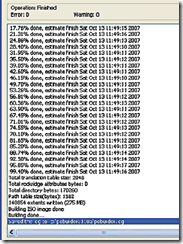
    Microsoft Windows XP live CD is the best way to boot into the Operating System without installation into the computer. By using this XP Live CD you can use XP and its features without actually installing them. This sounds cool, right? Creating a Live CD is not a big problem. It just involves adding of some plugins. One of the easiest ways to do this is using a software called pebuilder. Using it, you can create an XP Live CD in just about 15 minutes!

    Here’s all the software you’ll need:

    Thw XP live CD can be created by the following steps:

    Step 1: Download pebuilder3110a1.exe and install it.

    Step 2: For the wallpaper, replace C:\pebuilder3110a\bartpe.bmp with the image you want as your wallpaper. You can
    find the default XP wallpaper at C:\WINDOWS\Web\Wallpaper\bliss.bmp.
    (Both these, of course, assume the C drive as the installation location.)

    Step 3: Download the plugins:

    • xpe-1.0.7.cab: This will create the XP START Button taskbar. It is the GUI shell of the XP Live CD.
    • Network Driver Plugin Pack: This provides many network card drivers
    • FreeAV Virus Scanner: This integrates FreeAV
    • diskexplorer_for_ntfs.cab: A very good file explorer And more you can choose what you want to download to add functionality. There are 537 plugins right now to choose from!

    Step 4: Open pebuilder. Specify the source path to the Windows installation file. This should be your Windows XP installation bootable CD, where the i386 folder resides.

    Step 5: Click Plugins and add the plugins you’ve downloaded. Since you’ve included xpe-1.0.7.cab, disable nu2shell and the startup group.

    Step 6: Specify the ISO image file, and click Build.

    Step 7: After that’s done, use Nero and burn the image file to a CD. You’re done!